

Accelerating UK Patent Prosecution at the UK IPO: A Practical Guide
Introduction
Securing a UK patent is usually a long game. On a normal timetable, a UK patent application remains pending for several years before it is granted or finally refused. In many situations, that slow and steady pace is absolutely fine; it gives time to refine the technology, explore markets and spread costs.
In other situations, there’s a need for the UK Intellectual Property Office (UK IPO) to move faster. Perhaps a competitor is gearing up to launch a similar product, an investor is asking to see patent grants rather than applications, or a UK patent is needed to support grant in other territories.
This article explains:
- how the “standard” UK patent prosecution process works;
- when accelerating prosecution can help (and when it may not);
- the main acceleration options available at the UK IPO; and
- practical factors that also affect how quickly a UK patent application is examined and granted.
If you are considering accelerating a UK patent application and would like tailored advice, Russell IP’s patent attorneys can help you assess your options.
Table Of Contents
UK Patent Prosecution Procedure

Once a UK patent application has been filed at the UK IPO, it normally passes through the following main stages.
Formal Examination (Formalities Check)
After a patent application has been filed, the UK IPO carries out a formal examination (sometimes called a “formalities” check) to confirm that the application meets basic filing requirements and contains the necessary information. If something is missing or needs correcting, the UK IPO issues a notification asking for further information or amendments.
Formal examination is usually completed within a few weeks or months of filing, provided the application fee has been paid.
Search
The next major step is the UK IPO’s search. The UK IPO looks for earlier disclosures of the invention the patent application is trying to protect. The search usually focuses on earlier patent documents relating to similar technology, but any earlier public (non-confidential) disclosure can be relevant, including articles in trade magazines or scientific journals, conference papers, textbooks, websites and even videos.
The UK IPO carries out the search once the search fee has been paid and a search has been requested. The UK IPO aims to issue the search report within around six months of the search request, although the precise timing depends on factors such as when the request is made, the technology field and the UK IPO’s workload at the time.
Publication
Assuming various formal requirements have been met, the UK IPO publishes the patent application. Publication serves several purposes:
- it allows third parties to make observations on the application (for example, if they are aware of earlier disclosures that were not found in the UK IPO’s search); and
- it puts the public on notice that the invention may eventually be protected by a patent, which can have a useful deterrent effect.
Most UK patent applications are published 18 months after the earliest priority date. For many UK patent applications, the earliest priority date is the filing date of the UK application itself.
It is important to remember that publication does not mean that a patent has been, or will be, granted. The application is still just that: an application.
Substantive Examination
The UK IPO then carries out substantive examination of the application. During this stage, an examiner reviews the prior art found in the search and assesses whether the invention defined in the claims meets the main patentability criteria. In particular, the invention must be:
- new (novel);
- inventive (not obvious);
- capable of industrial application; and
- not excluded from patentability (for example, as a method of doing business or certain types of software “as such”).
The examiner also reviews the application itself, for example to check that the claims are clear and supported by the description, and that there is enough detail for a skilled person to work the invention.
If substantive examination has been requested when the application is filed, the UK IPO aims to combine the examination with the search within around six months of the request. If examination is requested closer to its deadline, the first substantive examination report will be issued several years after the application’s earliest priority date. The actual timing is influenced by factors such as when examination is requested and the UK IPO’s workload.
A response must be filed addressing any objections raised in the examination report. If the UK IPO is not satisfied with the response, one or more further examination reports may be issued until either all of the objections have been resolved or refusal of the patent application is anticipated.
Grant
If the UK IPO is satisfied that the application meets the relevant formal and substantive criteria, the UK IPO will grant a patent. There must be at least a three-month period between publication of the application and grant to allow time for third-party observations.
On a standard timetable, grant or final refusal of a UK patent application occurs between roughly two and five years after the earliest priority date, although this can vary considerably depending on the case.
Why Accelerate UK Patent Prosecution
The “normal” timescale is sometimes helpful. It can allow more time to develop and test products, to explore the market and to shape the final claim scope depending on how commercial plans evolve. It also spreads prosecution costs over a longer period.
However, in some circumstances, it can be commercially useful to try to obtain earlier grant of a patent by accelerating prosecution.
Potential Infringer
If a patent applicant becomes aware of a potential infringer in the UK, it may be strategically important to try to secure grant of a relevant patent as early as possible. A patent application cannot be enforced unless and until a patent has been granted, so acceleration may help reach a position where infringement proceedings are available sooner.
Securing Investment
Many investors are comfortable with pending patent applications, particularly where the underlying technology and IP strategy are strong. However, some investors (or internal stakeholders in larger companies) prefer to see one or more granted patents before committing significant funds. Early grant, or at least an indication of allowability, can therefore help strengthen the story presented to investors and other decision-makers.
Licensing And Other Commercial Transactions
Licensees may prefer licences to be based on granted patents rather than pending applications. Grant gives the licensee more certainty that enforceable rights exist and can support a stronger position against unlicensed competitors. This can, in some situations, support higher licensing fees or more favourable commercial terms.
Similarly, prospective buyers of IP rights may place a higher value on granted patents than on pending applications, because it shows they can have control over use of the patented technology.
Accelerating Grant In Other Territories
In some situations, securing an early UK patent can make it easier and cheaper to obtain granted patents elsewhere. For example, a granted UK patent may be used as the basis for accelerated examination under the Patent Prosecution Highway (PPH) in certain other jurisdictions (see Patent Prosecution Highway below).
Patent Box
A granted UK patent can potentially help access the UK’s Patent Box regime, which may reduce Corporation Tax on qualifying profits linked to patented technology.
These are just some of the reasons applicants might want to consider accelerating UK patent prosecution. The commercial context is key: acceleration is not “good” or “bad” in itself. It either fits objectives at a particular time, or it does not.
Why Not Accelerate UK Patent Prosecution
There are also potential drawbacks and trade-offs that can make it better to allow prosecution to proceed at the normal pace.
Bringing Forward Costs
Accelerating prosecution tends to bring forward costs such as UK IPO official fees and the costs for reviewing and responding to examination reports. Bringing costs forward may be justified by the commercial upside of early grant, but it is important to consider cashflow and budget before deciding to accelerate.
Finalising The Scope Of Patent Protection Sooner
Once a UK patent has been granted, the scope of protection it provides cannot be broadened. It may be possible to file a divisional patent application (which must be filed before the parent UK patent has been granted) to continue pursuing different claims after the parent UK patent has been granted. However, this increases the time and money spent on patent prosecution. Any divisional application will also need to be granted before it can be enforced, so there may still be a lengthy period before infringement action based on the divisional patent is possible, if at all.
Maintaining A Pending “Deterrent”
There is no guarantee that any given patent application will ultimately be granted. Extra effort spent on accelerated prosecution may still end in refusal. By contrast, the longer a patent application remains pending (i.e. not yet granted or finally refused), the longer the possibility remains that a patent might still be granted. That pending status can sometimes have a useful deterrent effect, as third parties may be reluctant to take risks on technology that might ultimately be covered by a patent.
This is not an exhaustive list. Depending on the circumstances, there may be further reasons not to accelerate prosecution of a particular patent application.
When deciding whether acceleration is the right strategy, all the potential advantages and drawbacks need to be weighed carefully.
How To Accelerate Prosecution At The UK IPO
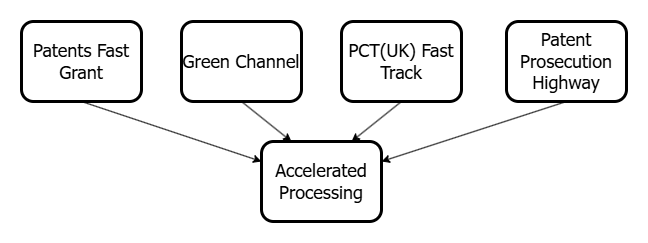
There are multiple routes for accelerating prosecution at the UK IPO and aiming for earlier grant (or, where that is not possible, earlier final refusal). The main options are:
- Patents Fast Grant, including:
- Combined Search And Examination (CSE);
- Accelerated Search And/Or Examination; and
- Accelerated Publication.
- Green Channel.
- Patent Cooperation Treaty (PCT) (UK) Fast Track.
- Patent Prosecution Highway (PPH).
The following sections give an overview of each.
Patents Fast Grant
Combined Search And Examination (CSE)
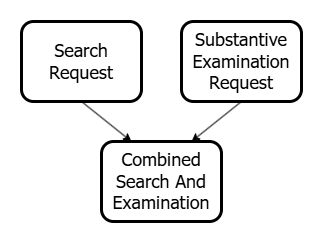
On the “standard” route, applicants often request search at, or soon after, filing and request examination later, close to the relevant deadline. Search and examination are then carried out separately. Depending on the timing of those requests and the UK IPO’s workload, it can take a couple of years or more from the earliest priority date for the first substantive examination report to be issued.
If, instead, search and examination are requested at the same time, the UK IPO will combine the search and examination stages and issue a single Combined Search and Examination Report (CSER). The UK IPO aims to issue the combined report within around six months of receiving the combined request.
For maximum acceleration, requests for search and examination can be filed at the same time as filing the patent application. The CSER should then be issued relatively early in the life of the application. As well as speeding up prosecution of the UK application, this can allow useful updates to be made to the patent specification before filing priority-claiming applications elsewhere. For example, it may be possible to file a further UK patent application adding new material to address prior art cited in the UK search, or to tackle other issues raised in the CSER, before filing applications in other jurisdictions. That, in turn, may help reduce overall patenting costs by improving the quality of subsequent applications.
There is no additional official fee for combined search and examination at the UK IPO, so CSE can be an efficient way to accelerate the early stages of UK patent prosecution.
Accelerated Search And/Or Examination
The UK IPO accepts written requests for accelerated search, accelerated examination or both. Adequate reasons must be supplied with the request. The UK IPO will consider those reasons and decide whether the application should be moved up the queue.
In practice, the UK IPO will often allow accelerated search and/or examination where, for example:
- the application relates to “green” technology (see Green Channel below);
- the applicant is aware of a potential infringer;
- the applicant needs a granted patent to help secure an investor or licensee;
- the applicant intends to use the granted UK patent as the basis for accelerated processing under the Patent Prosecution Highway (see Patent Prosecution Highway below); or
- the UK application is a PCT (national phase) application that received a positive International Preliminary Report on Patentability (IPRP) or a positive Written Opinion (WO) in the international phase (see Patent Cooperation Treaty (PCT) (UK) Fast Track below).
For maximum effect, requests for accelerated search and examination can be made on filing, alongside a request for combined search and examination.
If the UK IPO agrees to accelerate search, examination or CSE, the examiner will aim to agree a timescale for issuing the relevant report. Where examination has been accelerated, later examination actions will typically also be accelerated, provided the applicant’s own actions continue to demonstrate that they wish the application to progress quickly.
There is no additional official fee for accelerated search and examination at the UK IPO.
Accelerated Publication
Most UK patent applications are published 18 months after their earliest priority date. The UK IPO will then usually allow at least three months from the date of publication for third parties to file observations. As a result, a UK patent cannot normally be granted until at least 21 months after the earliest priority date.
To shorten that timeframe, accelerated publication can be requested. If a valid request is made, the UK IPO aims to publish the application within around six weeks of receiving the request (assuming any necessary formal requirements have been met).
A request for accelerated publication does not need to include reasons, but it should be clearly marked as such. For maximum acceleration, a request for accelerated publication can be filed alongside the patent application and requests for combined search and examination and accelerated search and examination.
However, accelerated publication should be considered carefully. Publication brings details of an invention into the public domain earlier, which may:
- shorten the time to develop and test your product in private before competitors can see the details in the application; and
- create prior art that can be cited against later applications relating to further developments of the technology.
There is no additional official fee for accelerated publication at the UK IPO, but the commercial and strategic implications of early publication need to be weighed carefully.
Green Channel
The UK IPO’s “Green Channel” provides for accelerated processing of applications that relate to environmentally beneficial (“green”) inventions.
To use the Green Channel, a written request explaining how the invention provides an environmental benefit must be made. The UK IPO does not usually investigate such assertions in detail. However, if a request appears clearly unfounded (for example, where it relates to a perpetual motion machine), the UK IPO is likely to refuse it.
The request should also indicate which actions the applicant would like to accelerate; for example, search, examination, combined search and examination and/or publication. Green Channel acceleration is not automatic; a specific request is still required.
There is no additional official fee for the UK IPO’s Green Channel.
Patent Cooperation Treaty (PCT) (UK) Fast Track
A UK patent application that derives from an international (PCT) patent application, often called a UK national phase application, can sometimes be accelerated under the UK IPO’s PCT(UK) Fast Track.
A request to accelerate a UK national phase application under the Fast Track may be granted if:
- a positive International Preliminary Report on Patentability (IPRP) or a positive Written Opinion of the International Searching Authority (WO‑ISA) was issued in the international phase; and
- all of the claims in the UK application are equivalent in scope to (or narrower than) claims that were indicated as novel, inventive and industrially applicable in the positive IPRP or Written Opinion.
The request for PCT(UK) Fast Track processing must be filed before the UK IPO has begun substantive examination of the UK application, for example on or shortly after entering the UK national phase.
There is no additional official fee for acceleration under the PCT(UK) Fast Track.
Patent Prosecution Highway (PPH)
The Patent Prosecution Highway (PPH) is an international initiative that allows applicants to leverage work done by one patent office to accelerate examination of corresponding applications at another. If claims have been found allowable or granted by one participating office, accelerated examination of corresponding claims can often be requested at another participating office, including the UK IPO.
To benefit from the PPH at the UK IPO, normally:
- a PPH request must be filed before substantive examination of the UK application has begun; and
- the claims in the UK application must “sufficiently correspond” to the claims that have been allowed or granted by the other office (for example, by matching their scope or making them narrower).
The PPH can significantly reduce the time to grant in the UK and can also help deliver more consistent patent protection across countries, because the UK IPO can build on work already carried out elsewhere.
There is no additional official fee for PPH-based acceleration at the UK IPO.
Russell IP can help obtain accelerated prosecution of UK patent applications using the routes described above. Get in touch with one of our experts to find out how.
Other Factors Affecting Speed of Prosecution
There are also practical factors, beyond formal acceleration mechanisms, that influence how quickly UK patent applications progress at the UK IPO.
Timing Of Payment Of Official Fees
Several UK IPO fees must be paid during prosecution, including the application fee, search fee and examination fee. When these fees are paid affects when different stages can take place. For example:
- formal examination only proceeds once the application fee has been paid;
- search can only proceed once the search fee has been paid and a search has been requested; and
- substantive examination can only proceed once the examination fee has been paid and examination has been requested.
Paying these fees earlier or later can therefore speed up or slow down progress. Missing a fee deadline is very serious and is likely to result in the application being treated as withdrawn if not remedied.
UK IPO Workload
The UK IPO has internal targets for how quickly different stages of patent prosecution should be started and completed. However, the volume and complexity of patent applications received at any given time can affect how quickly search and examination reports are issued. This means there can be periods when prosecution is slower than usual, even if one or more of the acceleration routes described above are being used.
Applicant Responsiveness
Search and examination reports usually come with deadlines by which action must be taken, such as filing a response or amendments. Sometimes it is helpful to take most of the time available, for example to gather data or consider strategic options. However, if early grant is a priority, responding promptly can help the UK IPO move on to the next step sooner, which may lead to an earlier final outcome.
Use Of Extensions
Some deadlines in UK patent prosecution can be extended on request, such as the period for responding to an examination report. Extensions can be valuable for applicants who need extra time, but they will inevitably lengthen overall prosecution. They may also make it harder to persuade the UK IPO that an application should later be accelerated. Extensions should therefore be requested only where they genuinely support a broader commercial and patent strategy.
Direct Contact With The Examiner
If there has been no activity on a case for some time, a polite enquiry to the examiner at the UK IPO can sometimes help prompt action. For particularly urgent cases, it can also be useful to contact the examiner shortly after filing a response, to check that it has been received and to ask (where appropriate) when the next report might be expected.
There may be other case-specific factors that influence the speed of prosecution.
Russell IP’s Acceleration Success
Many of Russell IP’s clients have chosen to use one or more of the UK IPO’s acceleration options. At the time of writing this article, the UK IPO has accepted every acceleration request we have made on behalf of those clients, giving us a 100% success rate for such requests.
Across these accelerated cases, the average time between requesting acceleration and receiving the first examination report has been 46 calendar days, compared with the UK IPO’s own target of issuing a substantive response to an allowable acceleration request within around two months in most cases. In some of our clients’ cases, the first examination report has arrived as quickly as 18 calendar days after the acceleration request.
Q&As
Here are some short Q&As about accelerated prosecution of UK patent applications before the UK Intellectual Property Office.
Q: Is it possible to accelerate the prosecution of a UK patent application?
A: Yes. Options for accelerating prosecution include: Patents Fast Grant (combined search and examination, and accelerated search and/or examination), Green Channel, PCT(UK) Fast Track and Patent Prosecution Highway.
Q: Is it always worth accelerating prosecution of a UK patent application?
A: Not necessarily. Acceleration can be very helpful in some situations (for example, where there is a potential infringer or an imminent investment round), but there are also advantages to keeping an application pending for longer and finalising the claim scope later. The right approach depends on specific circumstances and objectives.
Q: Are there cost implications to requesting accelerated prosecution of a UK patent application?
A: The UK IPO normally does not charge additional official fees purely for accelerated processing. However, acceleration usually brings forward prosecution costs, including official fees and the costs of reviewing and responding to reports. That can be positive or negative depending on cashflow and priorities.
Q: Does requesting accelerated prosecution guarantee a granted patent?
A: No. Acceleration is about speed, not outcome. A patent application that is accelerated can still ultimately be refused, for example if the UK IPO concludes that the invention is not new or not inventive in light of the prior art.
Conclusion
The UK IPO offers several ways to accelerate prosecution of UK patent applications, giving applicants the opportunity to aim for earlier grant where that makes commercial sense. There are also practical levers, such as when fees are paid and how quickly reports from the UK IPO are responded to, that can make a significant difference to overall timescales.
Whether acceleration is the right choice, and which mechanism to use, will always be context dependent. It is important to weigh the pros and cons carefully, including the impact on costs, claim scope and wider patent strategy. It is also important to remember that even a fast-tracked application is not guaranteed to be granted.
Russell IP can help you assess your own circumstances and decide whether, when and how to accelerate prosecution of your UK patent applications. We also have an excellent track record in persuading the UK IPO that our clients’ applications merit accelerated treatment.
Disclaimer
This article is intended to be a helpful guide for those wanting to understand some of the key considerations relating to accelerating UK patent prosecution. It does not provide an exhaustive explanation of all the factors that might influence a decision to request or not request acceleration. While we have tried to ensure accuracy of the explanations given, the article is for general information only and should not be taken as legal advice.