
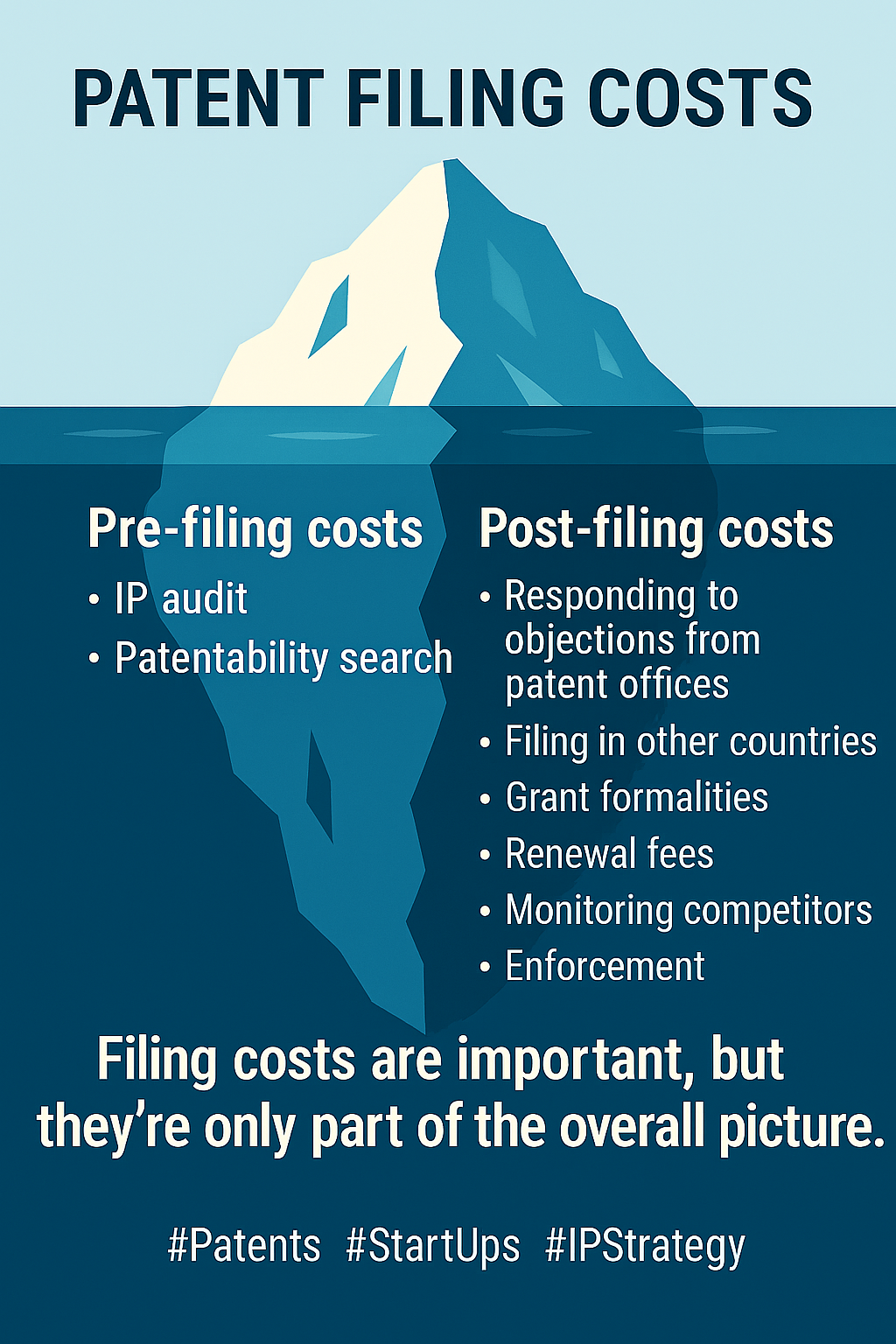
Patenting Costs – Seeing The Whole Picture
When you are considering filing a patent application, it’s important to understand the pre-filing and post-filing costs – not just the cost of preparing and filing the patent application itself. At Russell IP, we like to make sure our clients are aware of potential costs they might incur along the way to a granted patent, and beyond! Below are a few key examples.
If you’re looking for specific advice about the costs associated with patents, please contact Russell IP using the button below.
Disclaimer
This post is intended to be a helpful guide for those wanting to understand some of the key costs relating to patenting. While we’ve tried to ensure accuracy of the explanations given below, this post is for general guidance only and does not provide specific legal advice or an exhaustive list of possible costs. So please don’t rely on any of the explanations provided here and please do seek advice from a patent attorney if you would like to understand patenting costs in greater detail.
Pre-filing patenting costs
Here are some examples of costs you might incur before filing a patent application.
- IP audit: a review of your activities to identify inventions, branding and other aspects of your business which might be eligible for intellectual property (IP) protection.
- Patentability search: a review of existing patents, patent applications and other published materials to identify similar concepts to yours which might reduce the scope of patent protection you can get for your invention.
Completing these activities before filing a patent application may add value and/or save money in the longer term, as they can enable you to make more informed decisions about how to prioritise your IP budget and hone your patent applications to manage later costs.
Post-filing patenting costs
Once a patent application has been filed, there are usually several points at which post-filing patenting costs are incurred. Below are some examples.
- Responding to objections from patent offices: a patent office will typically examine the form and substance of a patent application to see if the application meets the patent office’s requirements for grant of a patent. This may result in one or more examination reports to which you must respond before a patent can be granted.
- Filing in other countries: patents are jurisdictional, i.e. a single patent covers a specific geographical territory. If you would like protection in other countries around the world, you will need to file additional patent applications which cover your desired countries.
- Grant formalities: after you have received the good news that the patent office intends to grant a patent for your invention, you may be required to complete some formal activities, such as filing translations, paying a publication/grant fee or registering an address for service.
- Renewal fees: most patent offices charge periodic fees to keep a patent in force. These generally increase as the patent gets closer to the end of its term.
- Monitoring competitors: keeping an eye on your competitors’ patent portfolios and products can give you insights into their development activities. This may help you identify products or processes of theirs which might infringe your patents, as well as warn you about patent applications of theirs which your own products or processes might infringe.
- Enforcement: if you think someone is infringing your patent, you may decide to take action to enforce your rights. The process for doing this varies from country to country and so you will need to obtain local advice about the procedure to follow.
Some of the above activities are mandatory, while others are optional. However, they should all be factored into your decision-making and budget-planning when considering filing patent applications.
Conclusion
Filing costs are important, but they’re only part of the overall patenting costs. Make sure you are aware of the other potential costs associated with patents so you can budget accordingly and get the most value from your IP spend.