
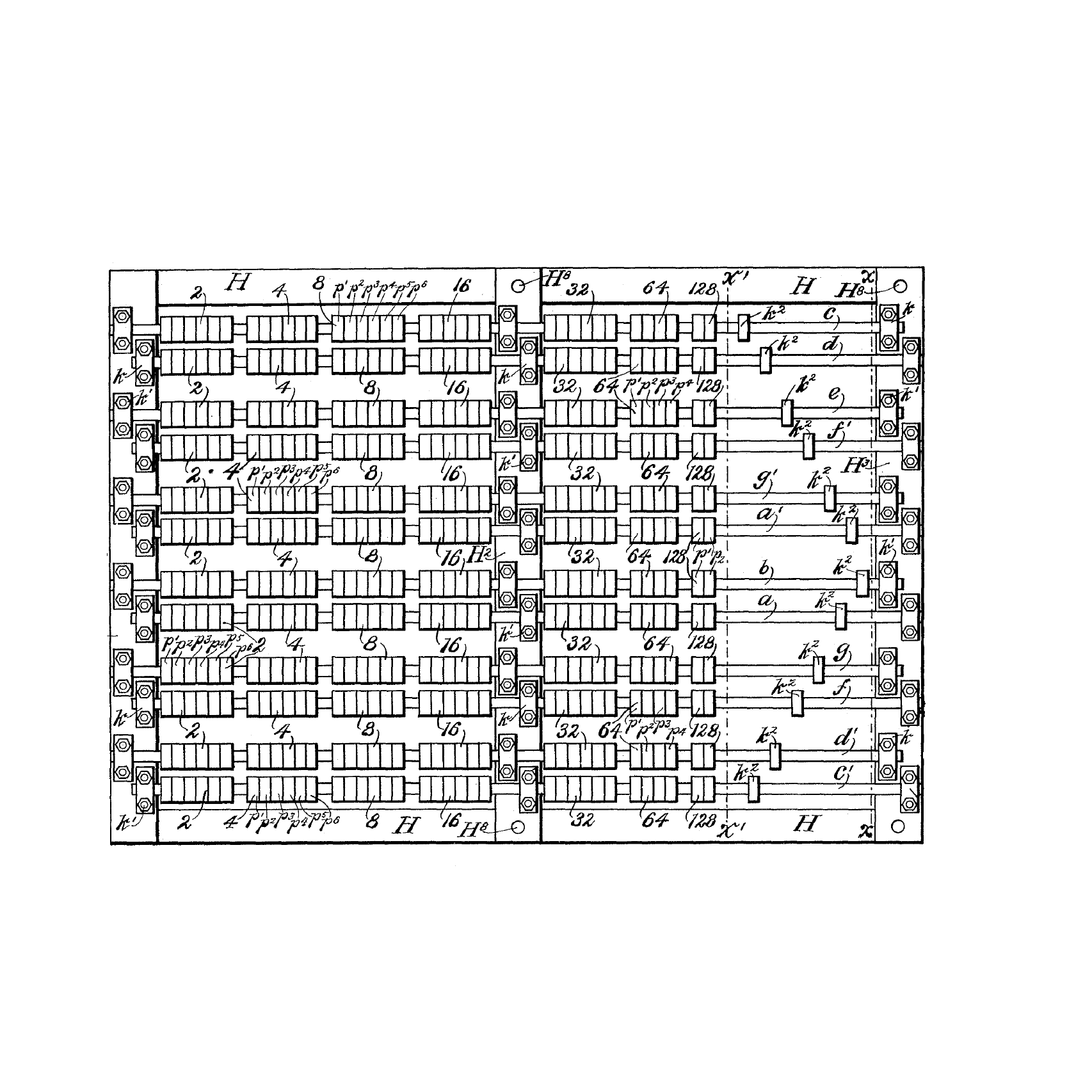
- Rockin’ Patent®: US Patent No. 580,035
- Filed: 4 February 1897
- In the name of: Thaddeus Cahill (inventor)
- Title: Art Of And Apparatus For Generating And Distributing Music Electronically
- What’s claimed: “In an electrical music-generating system, the method of producing composite musical sounds electrically, which consists in (a) producing by induction, in different closed circuits, electric-current undulations corresponding to different component sounds of the composite musical sound desired; (b) synthesizing in a conductor resultant undulations out of the undulations produced, as above mentioned, in a plurality of closed circuits; and (c) translating the built-up electrical undulations into comprise aerial vibrations of similar wave form.”
- Why this patent rocks: A remarkable patent and invention, which relates to the telharmonium (also known as the dynamophone). The patent itself appears to include 175 independent claims, which would attract enormous excess claims fees nowadays. You can read more about the telharmonium on Wikipedia here and in a fascinating article on Atlas Obscura titled “The telharmonium Was The Spotify Of 1906” here. To quote directly from the Altas Obscura article:
- “Invented by lawyer Thaddeus Cahill and initially known as the dynamophone, the telharmonium made use of telephone networks to transmit music from a central hub in midtown Manhattan to restaurants, hotels, and homes around the city. Subscribers could pick up their phone, ask the operator to connect them to the telharmonium, and the wires of their phone line would be linked with the wires emerging from the telharmonium station. The electrically generated tunes would then stream from their phone receiver, which was fitted with a large paper funnel to help pump up the volume. (The electric amplifier had not yet been invented.)”
If you’re a patent-savvy music tech business looking for patent help, get in touch with Russell IP here!
The information above is for general interest and information only and does not constitute legal advice.